Tomorrow will mark one week since war erupted again between Israel and Iran, this time with the United States fully involved, and now with almost the entire region drawn in.
I’ll share some sobering statistics in a moment. But first, let me speak as a parent.
My older daughter has lived in Tel Aviv since 2022, when she made aliyah. And since last Shabbat, when the fighting began, she’s rushed to shelter at least 50 times. Some nights, sleep is interrupted two or three times, layering exhaustion onto anxiety.
In June, during the 12-day war with Iran, the cycle of ballistic missiles, sirens, and sheltering was still new to her, making it more emotionally draining. This time, she seems to have grown more accustomed to it. As a father, I’m somewhere between relieved by her growing resilience and saddened that one can “get used” to this.
She has two friends without shelters in their own apartment who’ve now temporarily moved in with her. Many others in Israel are doing the same, as roughly one-third of the Israeli population lacks quick access to a standard shelter.
Now, the broader picture, in numbers:
- Iran has launched 220 ballistic missiles and 350 drones toward Israel.
- Israeli casualties: 13 killed and 1,541 injured, including 60 in moderate to serious condition.
- U.S. service members: 6 killed and 18 injured.
- Housing impact: At least 2,800 people have been displaced from their homes.
- 30,000 alerts have sounded nationwide since the fighting began — about half in central Israel.
If you watch this video, you’ll see what it’s like for Israelis in central Israel, many using parking garages as shelters. While there is usually more warning time for the ballistic missiles launched from Iran, residents in the north, who are now under attack from Hezbollah, often have only seconds to reach shelter. They must run faster.
And yet… Israelis carry on, live their lives. Find joy.
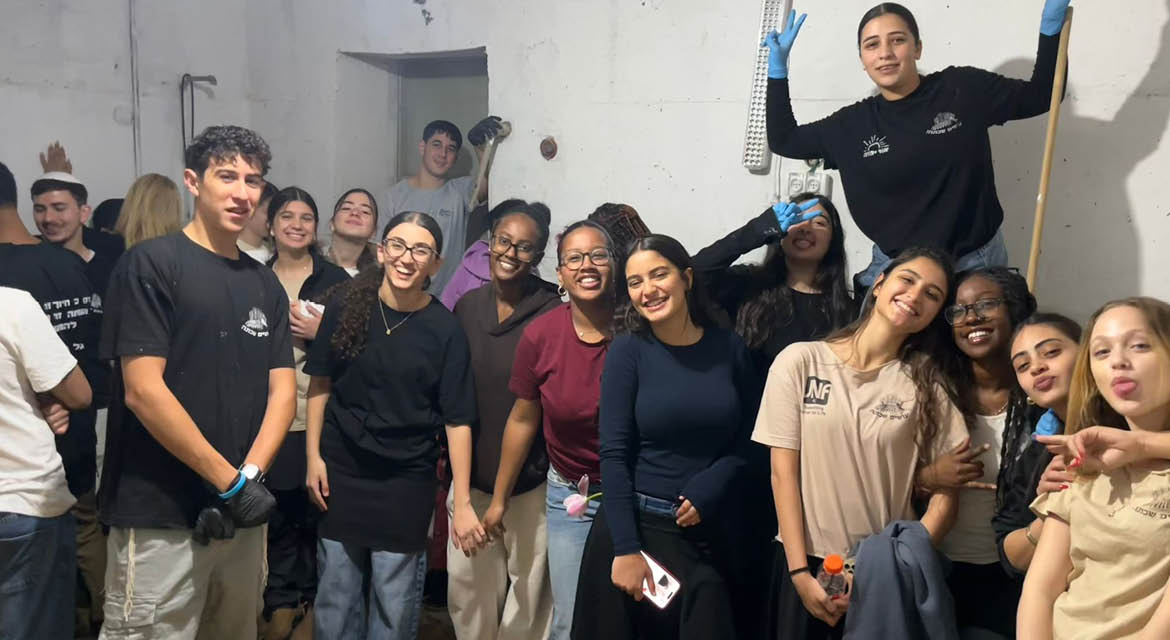
On Monday and Tuesday, there were megillah readings and raucous Purim parties in shelters across Israel. Couples celebrated their weddings held in shelters. There are complete strangers sharing food. Sharing homes. Sharing strength.
And we are there with them.
This past Monday, we authorized an initial $2 million in emergency funding, on top of the more than $320 million we’ve allocated since October 7. These new funds are focused on the most immediate needs: support for hard-hit municipalities, trauma and resilience services, and emergency assistance for vulnerable populations.
For many — especially the elderly and people with disabilities — the simple act of getting to and from a shelter is physically daunting, even impossible. On Sunday in Ramat Gan, a 102-year-old man tragically died after falling down the stairs on his way to a safe area.
We remain in constant contact with our partners on the ground, who are helping to lead an extraordinary emergency response across the country.